Can You Use Any UV Lamp for Semi Cured Gel Nails?
Wattage is the loudest number on the box—and often the least useful one. Compatibility starts with the strip maker’s directions.
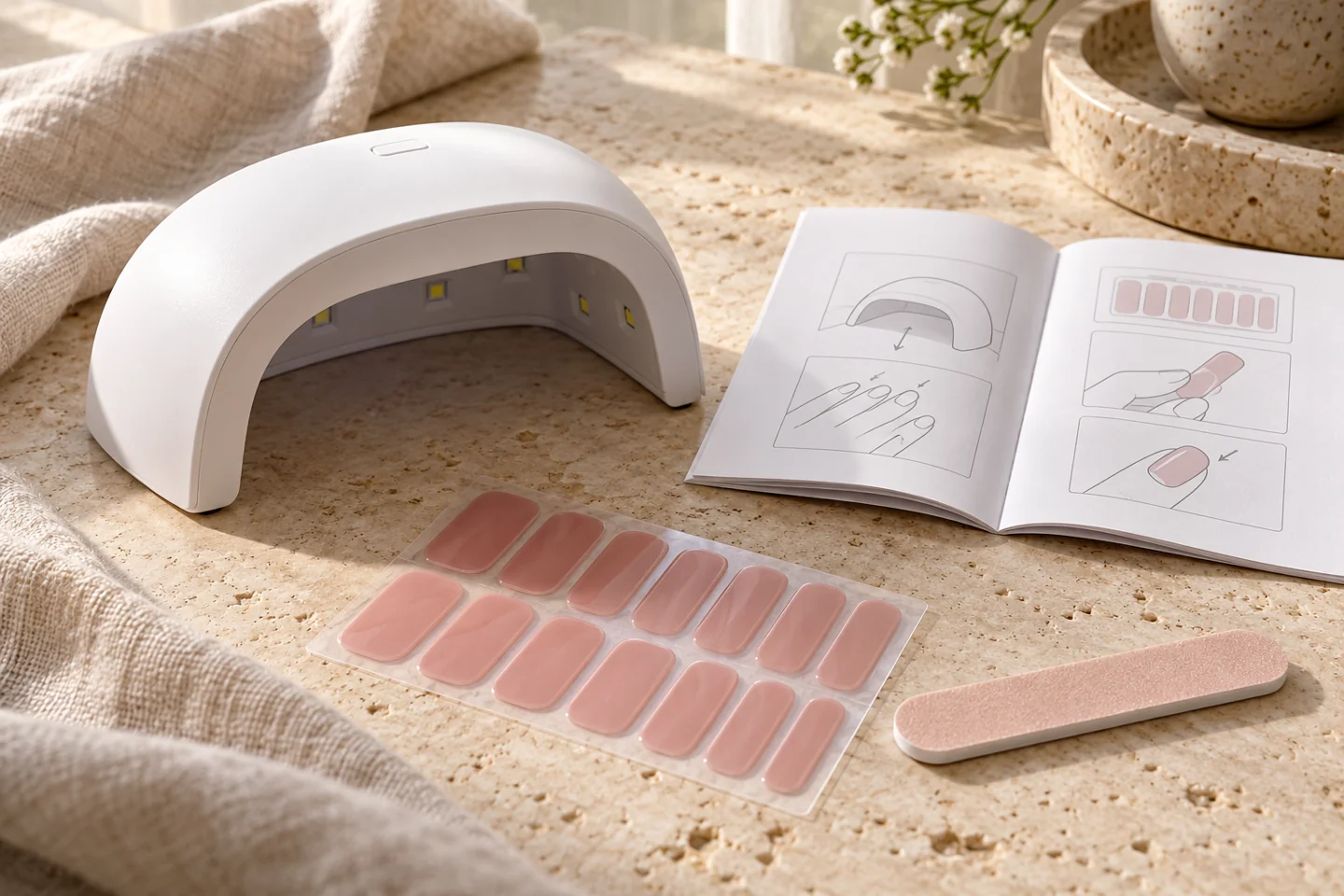
A marketplace search turns a simple lamp into a wall of numbers: 6 watts, 24 watts, 48 watts, dual light, mini, salon, portable. It is tempting to buy the highest number and call the problem solved. Semi-cured strips are more specific than that.
The right uv lamp for semi cured gel nails is the one designed or explicitly approved for the formula. The strip contains photoreactive materials that respond to light within a defined range. Output on a listing cannot tell you how evenly that light reaches the thumb or whether the brand tested the combination.
Treat the strip, lamp and timing directions as one system. Convenience begins after compatibility, not before it.
Why Lamps That Look Identical Can Behave Differently
Two small lamps can have different wavelengths, diode arrangements and distance from nail to light. One may concentrate light in the center while another reaches the sidewalls more evenly. The printed wattage describes power consumption or marketed output; it does not prove a complete cure for a particular product.
Manufacturer instructions are therefore the first source. Dashing Diva currently directs Glaze users to cure under its LED lamp for 60 seconds. Ohora directs users to cure its strips one to two times with the brand lamp. Those directions belong to those products; they are not universal conversions.
- Match the product name, lamp type and current directions.
- Check that the thumb sits fully beneath the diodes.
- Replace damaged cables or lamps that flicker.
UV and LED Labels Do Not Tell the Whole Story
LED describes the light source, while ultraviolet describes part of the emitted spectrum used to trigger curing. Consumer listings often use “UV/LED” loosely. A label alone cannot establish that a lamp is suitable for your strip chemistry.
Avoid translating salon-polish cure times to strips. A liquid gel layer, a partially cured strip and a top coat can use different systems. If a brand says its miniature lamp is required, use that guidance or ask support for a compatible alternative in writing.
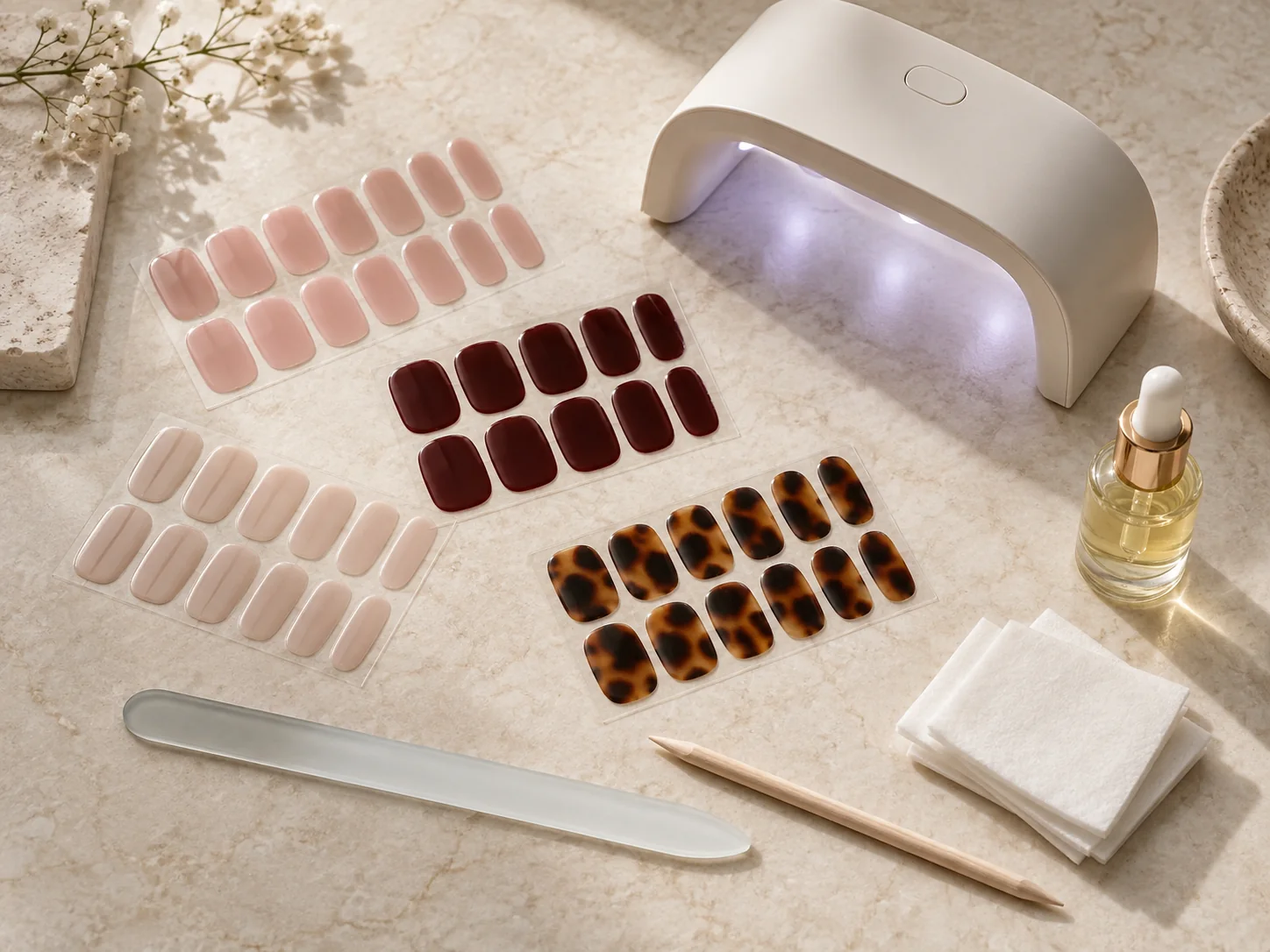
Do Not Shop by Wattage Alone
Higher wattage can sound faster and more professional, but it does not fix a wavelength mismatch or shadowed sidewall. It may also encourage users to shorten the instructed exposure without evidence. Use the complete cycle stated by the manufacturer.
The more useful shopping questions are practical: Does the brand identify this lamp? Is the hand position obvious? Are the diodes arranged to reach all nails? Does the timer match the stated cycle? Can customer support explain compatibility without guessing?
Useful Signals vs Marketing Noise
| Check | Useful | Not enough on its own |
|---|---|---|
| Compatibility | Named by the strip maker | “Works with all gels” |
| Coverage | Diodes reach every nail | Large housing |
| Timing | Cycle matches directions | Fastest possible cure |
| Support | Current manual and contact | Marketplace star count |
| Power | Stable listed adapter | Highest wattage number |
How to Cure Evenly Without Chasing Extra Cycles
Place the hand flat and relaxed so every strip sits within the light field. Cure the four fingers, then reposition the thumb if the lamp shape leaves it angled away. Keep the strip sheet and unused pieces far from the lamp because stray exposure can harden them in the package.
If a correctly applied strip remains unusually soft, do not keep adding cycles indefinitely. Check the directions, power connection and lamp model. Contact the manufacturer. Excess time cannot compensate for incompatible light and should not be used as a cure test.
- Use a stable tabletop, not a pillow or lap.
- Do not look directly into the lamp.
- Remove product from skin before curing.
Comfort and Skin Contact Matter More Than Speed
Gel material should not be deliberately cured on skin. Carefully size the strip and remove any overlap first. The American Academy of Dermatology advises protecting hands from ultraviolet exposure during gel manicures with broad-spectrum, water-resistant SPF 30+ sunscreen or dark opaque fingerless gloves, while noting that this does not apply to every situation or lamp design.
A brief warmth can occur with some gel systems, but sharp heat, burning, itching or swelling is a stop signal. Remove hands from the lamp and follow the product’s safe-removal guidance. Persistent symptoms deserve medical advice.
A Five-Question Lamp Checklist
Before buying, ask whether the lamp is named by your strip brand, whether the seller is authorized, whether the timer matches the directions, whether replacement support exists and whether the whole nail fits beneath the light. If one answer is vague, pause.
A branded mini lamp can be less flexible than a large salon lamp, but predictability is valuable for beginners. Once you know the chemistry and have written compatibility information, you can compare alternatives with more confidence.
- Product-specific approval
- Clear wavelength or system information
- Full nail coverage
- Matching timer
- Return and support policy
What to Shop—and What to Check
Listings, sellers and prices change. These links are starting points, not claims that an item is currently a bestseller. Confirm compatibility and current directions before purchasing.
Dashing Diva LED Lamp
Use for compatible Glaze products according to Dashing Diva’s current directions.
Ohora Gel Lamp
Check the current Ohora set or lamp page for compatibility with its strips.
Semi-Cured Gel Nail Lamps
Use marketplace results only to compare features; verify compatibility before ordering.
Uv Lamp For Semi Cured Gel Nails: FAQ
Can I use a 48W lamp for semi-cured strips?
Only when the strip maker confirms compatibility. Wattage alone does not answer the question.
Is LED safer than UV?
LED nail lamps can still emit ultraviolet radiation. Follow exposure and product guidance rather than assuming the label removes all UV.
How long should I cure gel strips?
Use the exact time stated for your product and compatible lamp. Dashing Diva and Ohora currently publish different instructions for their own systems.
Can I cure the strip twice?
Only if the manufacturer permits or directs it. Ohora currently instructs one to two cures for its strips; that does not transfer to every brand.
Why is my thumb still soft?
Its angle may place it outside the strongest light area. Reposition it as the manual shows and check with the brand.
Does a stronger lamp make strips last longer?
Not necessarily. Prep, sizing and edge finishing are also major wear factors.
Can I use a lamp with no manual?
A missing manual and vague compatibility are good reasons to choose a better documented product.
Choose proof of compatibility over a bigger number
The best uv lamp for semi cured gel nails is not automatically the brightest, fastest or most expensive. It is the lamp that the strip manufacturer can identify, explain and support.
Begin with one matched system. Keep the hand flat, the product off skin and the cure cycle exact. That quiet consistency is more useful than experimenting with a drawer full of mystery lamps.